🎯 Goal of the Testing
We conducted these real-world tests following field reports that the Model X2, which uses the Sensirion SEN66 sensor, may be under-reporting particulate matter (PM) levels—especially in outdoor environments.
To investigate:
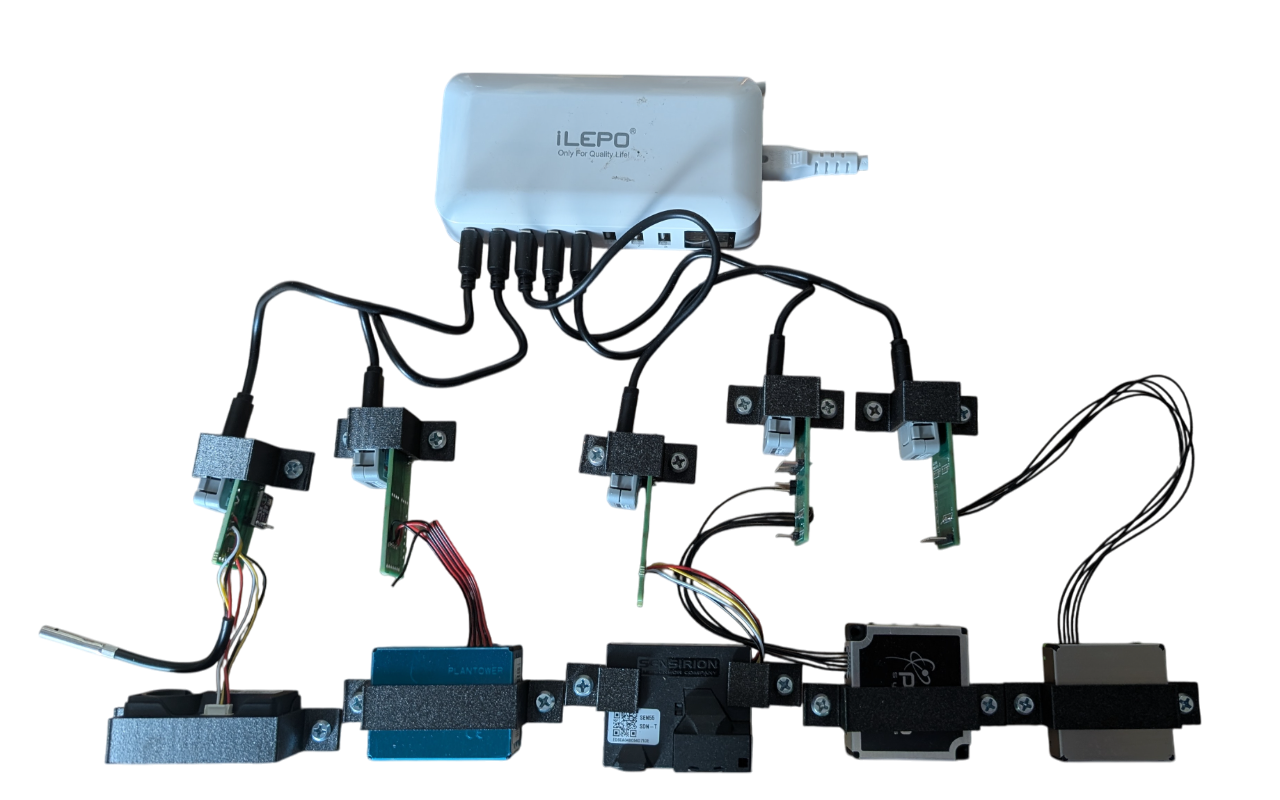
- We deployed five different PM sensors side-by-side
- Simulated a variety of indoor and outdoor particle events
- Maintained a consistent 5-second sampling interval
Our aim was to benchmark performance across sensors and validate or refute concerns regarding outdoor PM sensitivity—particularly for smoke and coarse dust events.
🧪 Test Overview
- Five particulate matter (PM) sensors were evaluated in controlled indoor and outdoor environments
- Objective: assess real-world responsiveness to common sources of coarse and fine particulate pollution
- All sensors sampled data at 5-second intervals for consistent comparison
📍 Test Scenarios
Indoor tests:
- Cooking with butter on a non-stick pan (no range hood)
- Cleaning a dirty filter with a ShopVac
- Releasing sawdust from a miter saw bag
- Lighting and extinguishing cardboard matches
- Blowing out a candle flame
Outdoor tests:
- Nearby tractor emitting smoke during mowing
- Regional wood-burning/firepit event (strong odor detected)
- Western Canada wildfire smoke
🛠️ Test Setup and Sensor Configuration
Each sensor connected to its own ESP32 processor, sending measurements every 5s over MQTT to a locally hosted ThingsBoard Community server over Wi-Fi
⚠️ Disclaimer
The results presented in this report are based on informal, real-world testing using a single unit of each sensor model (n=1).
These tests were not conducted under laboratory conditions and are intended to provide practical, observational insights, not scientific validation.
Sensor performance can vary between units and may be influenced by factors such as placement, airflow, and environmental conditions.
This comparison is meant to guide design decisions and highlight performance trends—not to serve as a definitive assessment of any sensor's capabilities.
Indoor Tests Results
Eggs with Butter in a Non-Stick Frying Pan
Sensors were located about 8ft from the cooking surface. Range hood fan was not running.
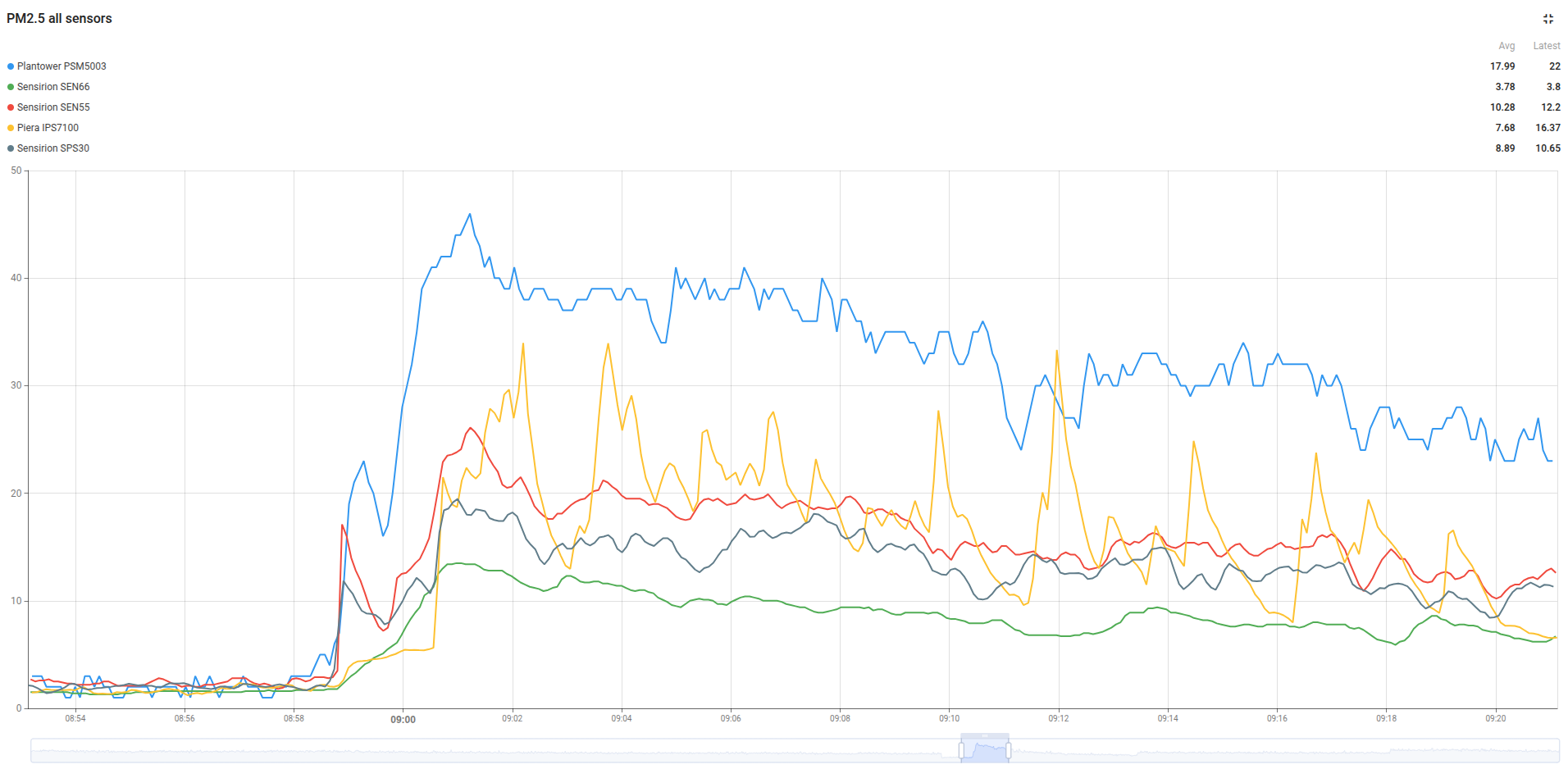
ShopVac Test
Sensors were located at 2ft from the source. Using a ShopVac to clean a dirty air filter.
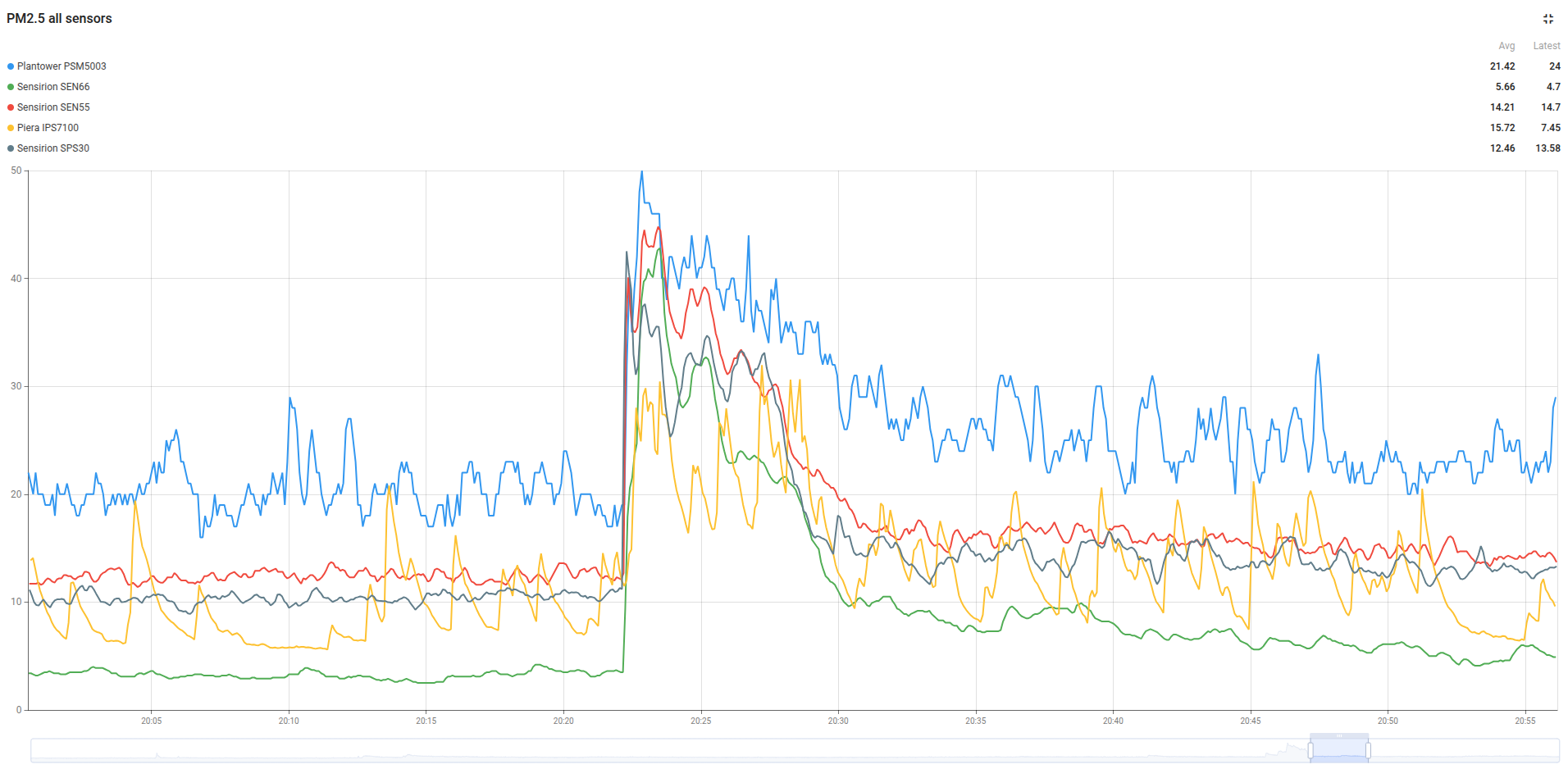
Sawdust Test
Sensors were located at 2ft from the source. Wiggled miter saw dust bag in the air to generate particles.
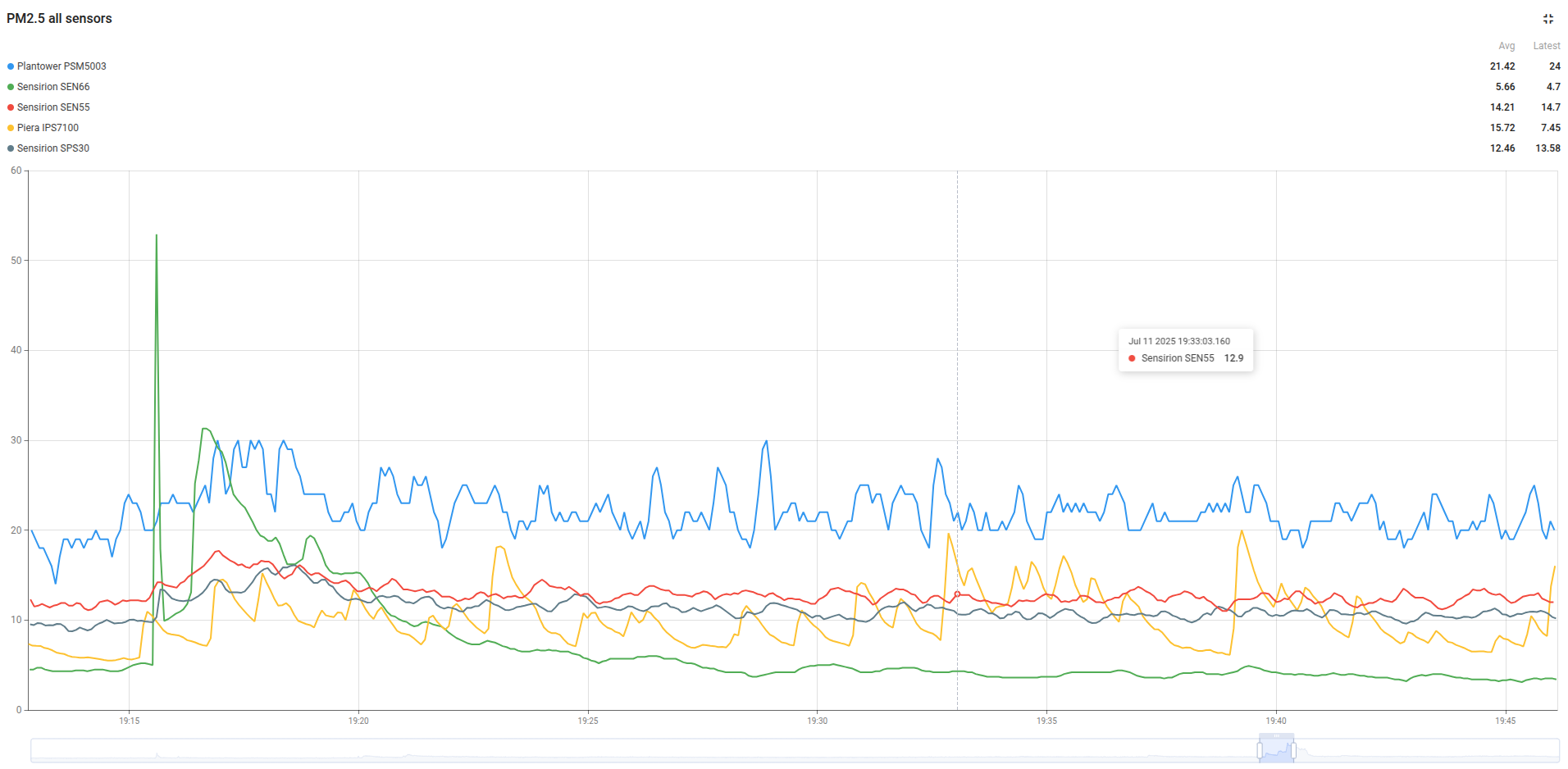
Matches Test
Sensors were located at 2ft from the source. Light up 2 cardboard matches and blow on them to extinguish and generate smoke.
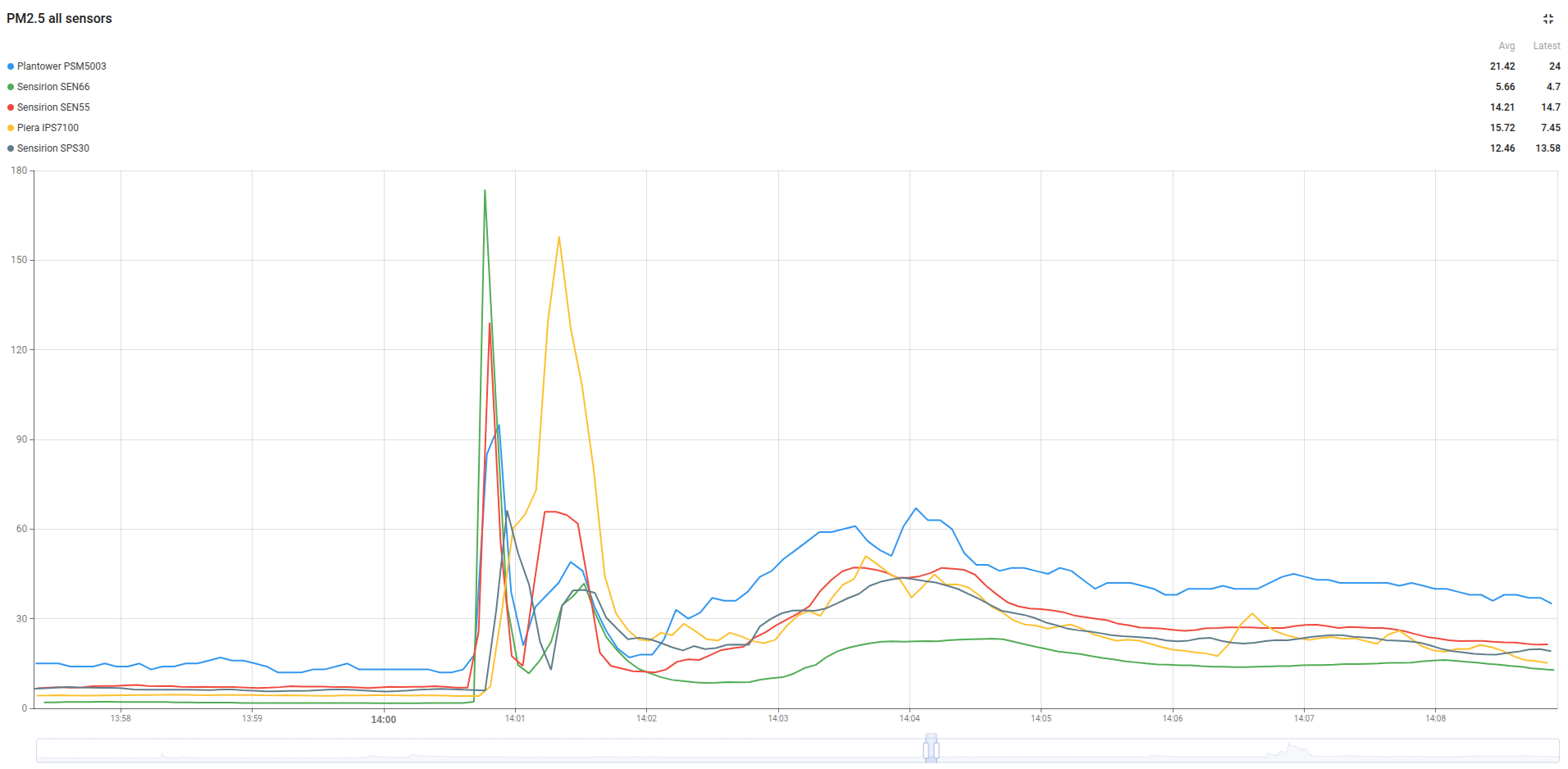
Matches Test #2
Sensors were located at 2ft from the source. Light up 2 cardboard matches and let them burn and die
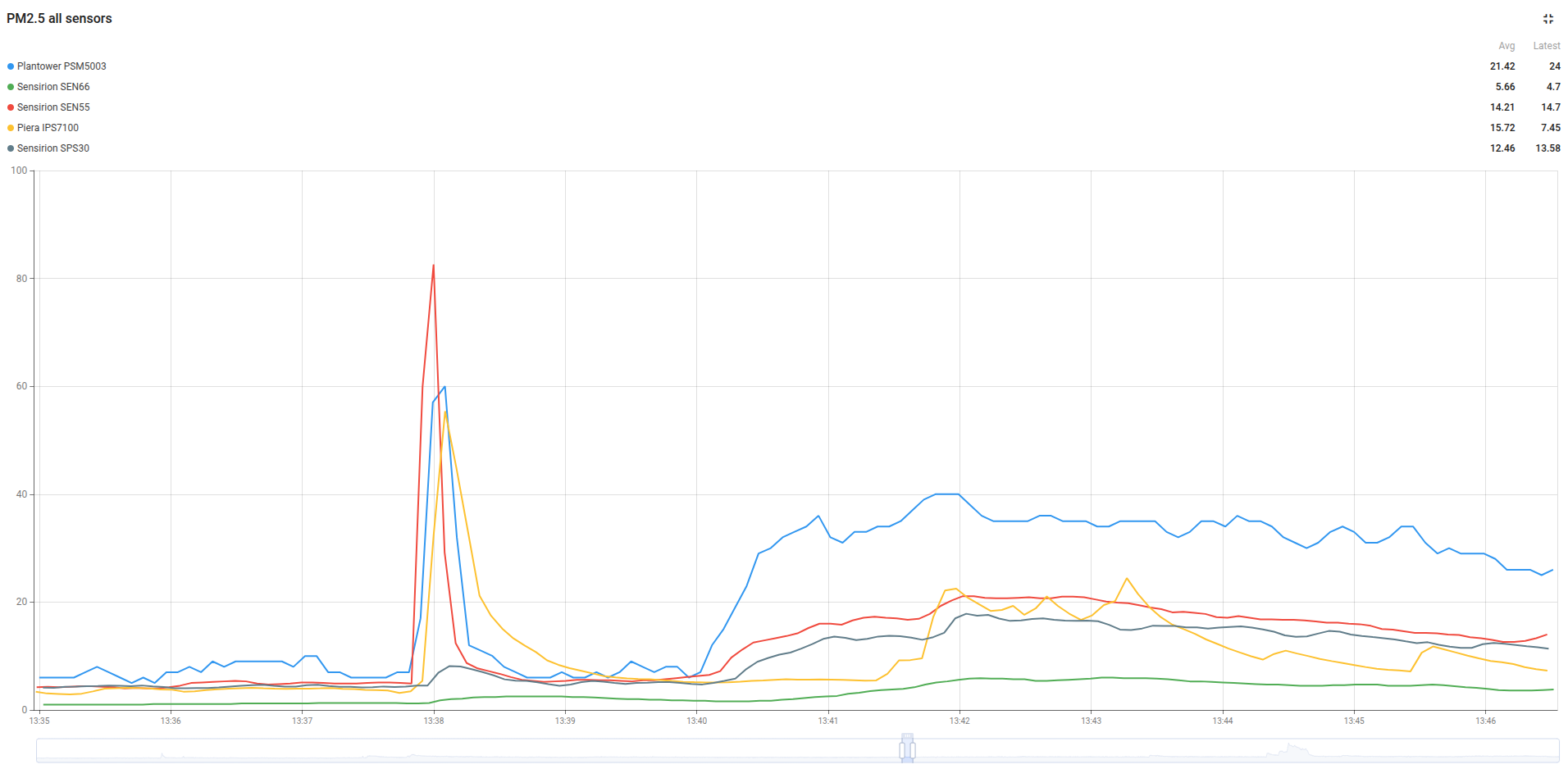
Candle Burn
Sensors were located at 2ft from the source. Light up a candle and blow on it to extinguish.
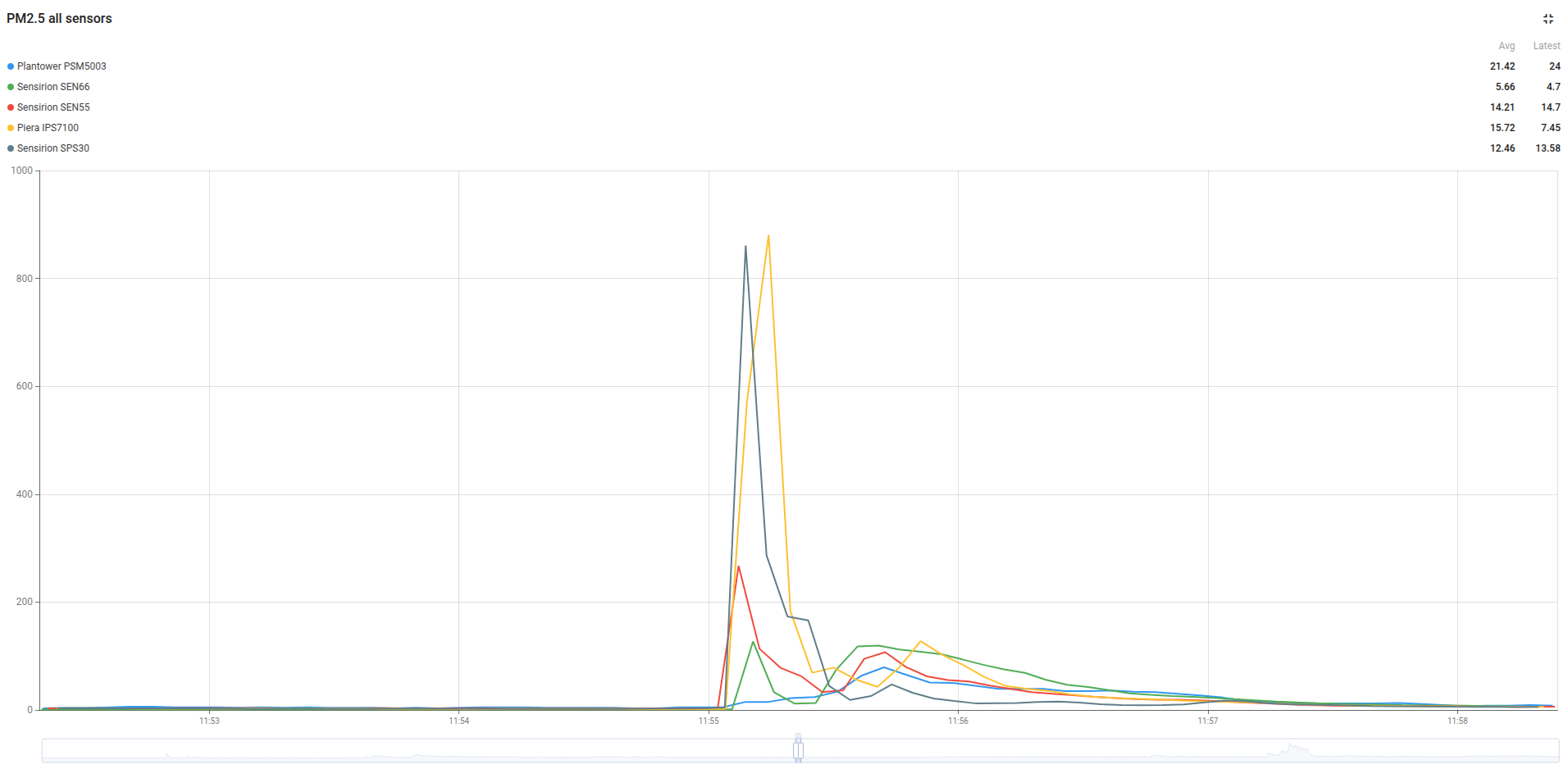
Outdoor Tests Results
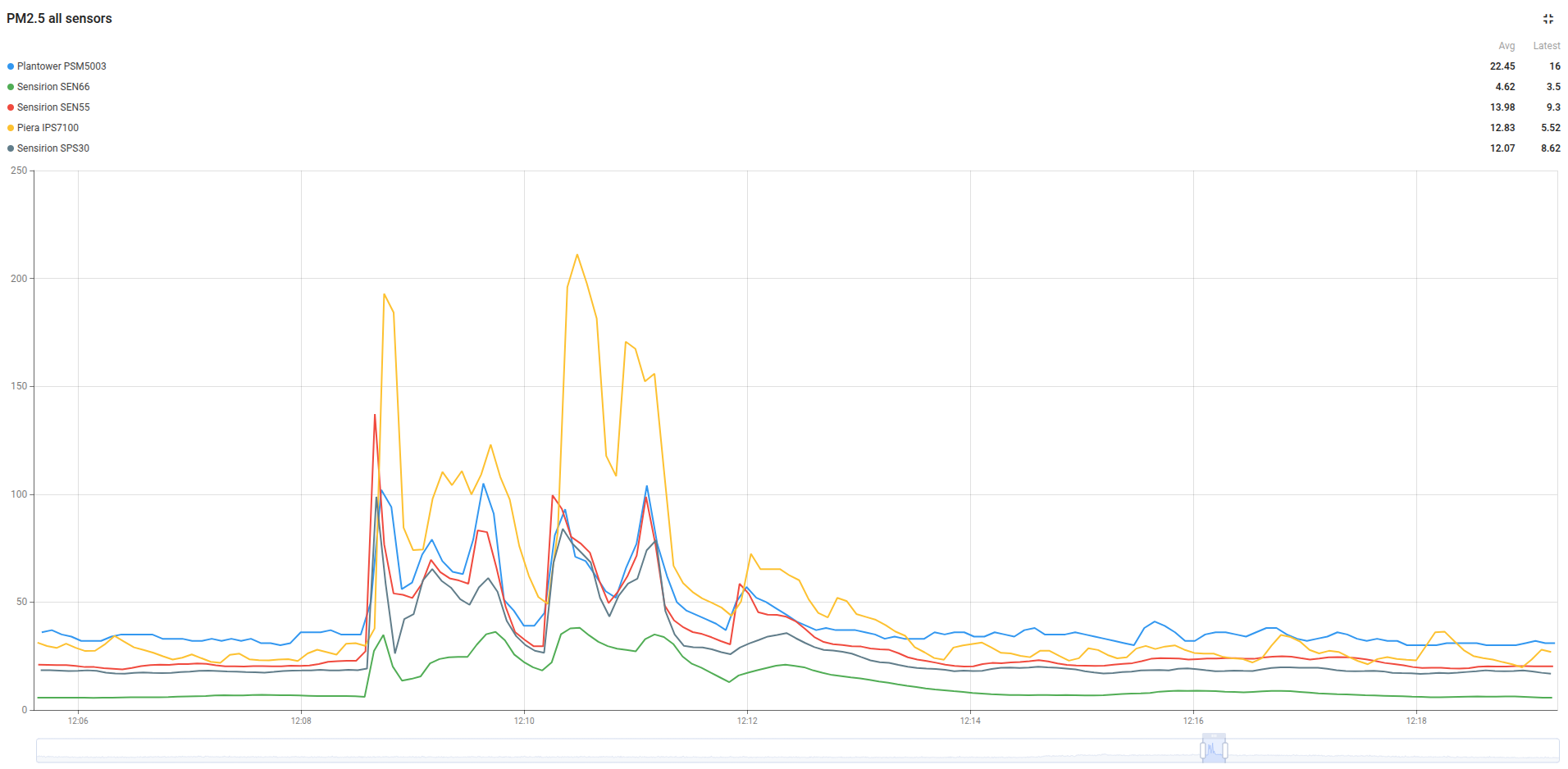
Neighbor Doing Lawn on Tractor
Sensors were located about 30ft from the source. The tractor is overheating and generating a lot of smoke.
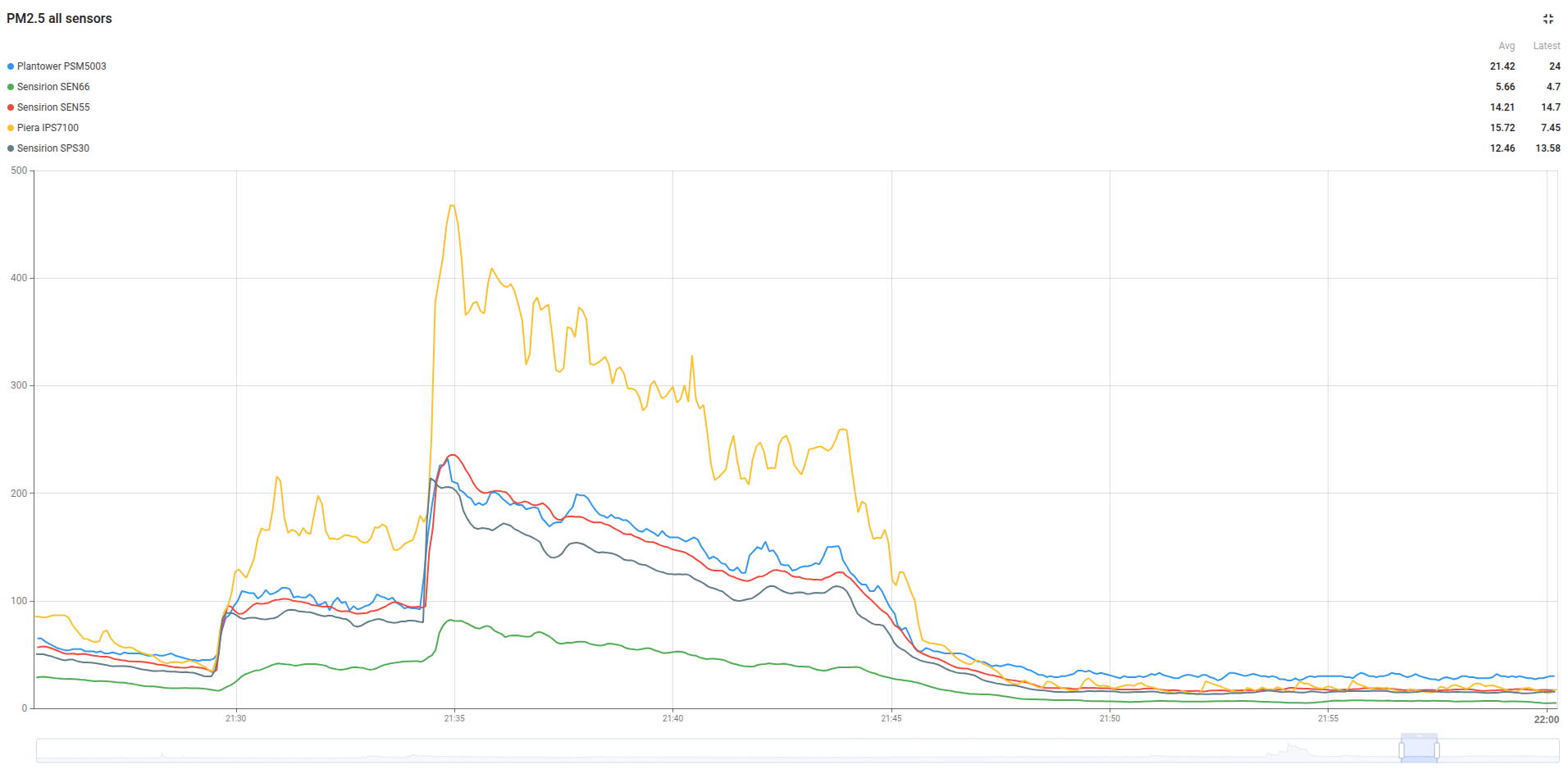
Fire Pit (or Similar) Event in the Area
Sensors were located at an unknown distance source. Strong wood burning smell in the air.
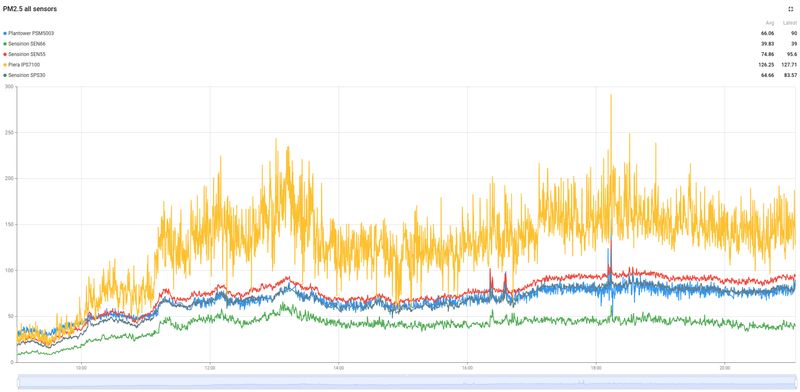
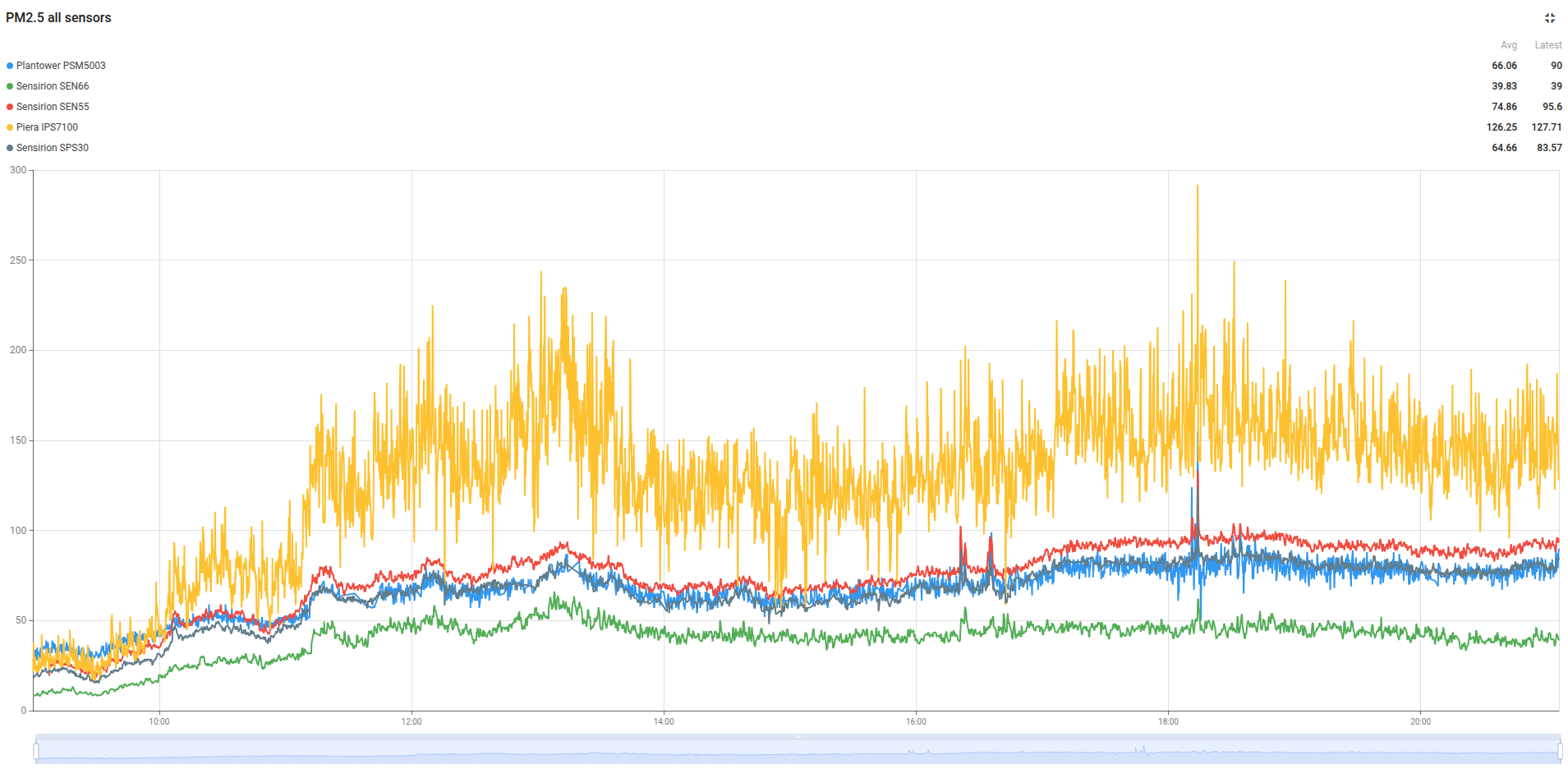
Western Canada Wildfire Smoke (Full Day)
Smoke cloud from the western Canada wildfire hitting our area over a full day. No smoke smell, buy hazy skies.
✅ Conclusion and Next Steps
Based on the results of this real-world testing, we have confirmed that the Sensirion SEN66, while fast and responsive to some specific PM events, tends to under-report PM levels in outdoor and combustion-related conditions.
As a result, the Model X2 will be redesigned to include:
- Sensirion SEN55 for broader and more accurate PM detection
- Sensirion SCD30 for reliable CO₂ measurement
This new configuration will provide improved outdoor performance, especially in wildfire smoke, urban pollution, and coarse dust scenarios.
🤝 Customer Commitment
Customers who previously purchased Model X2 units using the SEN66 sensor will be offered a free exchange to upgrade to the new SEN55-based version, at no cost.
Thank you for your trust – your feedback helps us build better sensors for everyone. 💚